

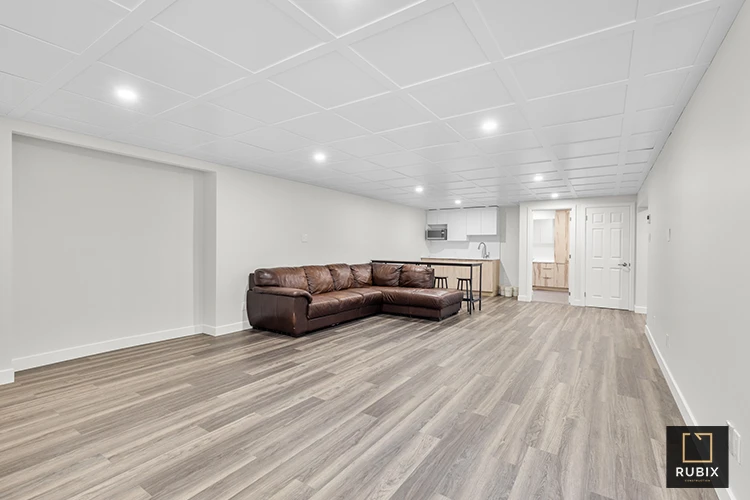
The basement of your home is a versatile space that can be converted into a playroom, office, or even a bachelor. But when renovating, it is essential to think about how to close off your basement ceiling. This is because several important elements of your home, such as plumbing, ventilation, and electrical systems, are often hidden in this ceiling. Choosing the right covering is therefore crucial, both from a practical and aesthetic point of view.
Here are different options for closing your basement ceiling, along with their advantages and disadvantages, to help you choose the one that best suits your needs.
Suspended ceilings: A practical and aesthetics solution
A suspended ceiling is undoubtedly the most popular option for basements. It allows easy access to elements located above, such as electrical cables and ventilation ducts. This can be very convenient if you need to make repairs or adjustments in the future, as you can easily remove and replace the panels without damaging the ceiling.
In terms of aesthetics, suspended ceilings now offer a wide range of styles and finishes. You can choose from classic polystyrene tiles, modern metal tiles, or even acoustic models for better soundproofing in your basement.
Pros :
- Easy access to hidden elements.
- Wide range of styles and materials.
- Quick and easy installation.
Cons :
- May not offer as sleek or elegant a look as other options (depending on customer preferences).
The ceiling made of gypsum (plaster) panels
Gypsum board ceilings are probably upon the most popular option because they are an economical and attractive solution that creates a smooth, clean finish. Gypsum also offers good thermal and acoustic insulation properties, which can make your basement more comfortable.
However, unlike suspended ceilings, gypsum ceilings do not allow easy access to cables or pipes once installed. If you need frequent access to these elements or a small unexpected event occurs, this option may not be the most practical.
Pros :
- Sleek and modern design.
- Good thermal and acoustic insulation properties.
- Relatively affordable.
Inconvénients :
- Difficult access to installations behind the ceiling.
- Less convenient when maintenance is required.
Wooden ceiling or paneling
A wood or paneling ceiling can add a warm and elegant touch to your basement. Whether you choose raw or treated wood, this option offers a natural look that blends well with both traditional and modern styles. Paneling can be painted or stained according to your preferences, allowing you to customize the appearance of the ceiling.
Although wood provides an attractive aesthetic, it is important to note that it requires regular maintenance, especially in a basement where humidity can be an issue. Wood is also more expensive to purchase and install than other options.
Pros :
- Adds warmth and character to the space.
- Customizable (paint, stain).
- Fairly easy to install.
Cons :
- Regular maintenance required.
- More expensive than other materials.
Here are some other less common options that are available on the market.
Stretch ceilings: Modern and elegant
If you are looking for a modern solution with a smooth, sleek finish, a stretch ceiling is an excellent option. This type of ceiling is made of PVC or stretched fabric (canvas) attached to a metal frame..
A stretch ceiling allows for the integration of lighting elements such as recessed spotlights, which can create an interesting visual effect. However, this type of ceiling must be installed by a professional, and it is generally more expensive than other options.
Pros :
- Smooth, modern finish.
- Easy integration of lighting.
- Can hide imperfections in the ceiling.
Cons :
- Installation is costly and requires a professional.
- Prone to tearing if not properly maintained.
- Harder to access the systems behind the ceiling.
Metal ceilings: An industrial choice
If you’re a fan of industrial style, a metal ceiling is an option worth considering. Made from metal grids or perforated panels, it can offer a unique urban/industrial aesthetic. What’s more, metal is durable, easy to maintain, and particularly well suited to spaces that require increased ventilation
However, this type of ceiling may not suit all decors and may produce more noise in an uninsulated space.
Pros :
- Unique industrial aesthetics.
- Ease of maintenance.
- Optimal ventilation.
- Relatively easy accessibility to components.
Cons :
- May not suit all decorating styles.
- More noise if the insulation is inadequate.
Exposed concrete ceilings: For a raw, modern look
Le plafond en béton apparent est parfait si vous cherchez un style industriel ou minimaliste. Laisser le béton visible crée une ambiance moderne et brute, très tendance dans les espaces urbains. De plus, cette option est peu coûteuse et nécessite peu d’entretien.
Toutefois, le béton peut être perçu comme froid et peu accueillant, et il nécessite une protection contre l’humidité, surtout dans un sous-sol. Il est aussi important de s’assurer que le plafond en béton ne présente pas de fissures ou d’imperfections avant de l’adopter.
vc_column_text: content
Pros :
- Raw and modern style (if that’s a style you like).
- Low maintenance.
- Sustainable and affordable.
Cons :
- May appear cold and unwelcoming.
- Requires moisture-proof insulation.
- No accessibility to the elements possible. Once the concrete has been poured, it is final.
PVC ceiling: Simple and cost-effective
PVC or plastic panel ceilings are easy to install, moisture resistant, and available in a wide variety of styles. They are ideal for basements that are exposed to higher humidity levels. PVC is also a very affordable option.
However, this material can lack character or elegance and is not suitable for those seeking a more refined style.
Pros :
- Quick and easy installation.
- Moisture resistant.
- Affordable.
- Easy acces to elements behind the ceiling.
Cons :
- Less sophisticated.
- Less durable than other materials
Conclusion: Choosing the right ceiling for your basement
The choice of ceiling for your basement depends on several criteria, including your tastes or the style you want to give the space, your budget, and ease of access to technical elements (cables, pipes, etc.). Suspended or gypsum ceilings remain the most popular options, but other solutions such as wood or metal can offer equally attractive finishes.
Take the time to think it through and choose carefully based on your situation before starting your renovations.