

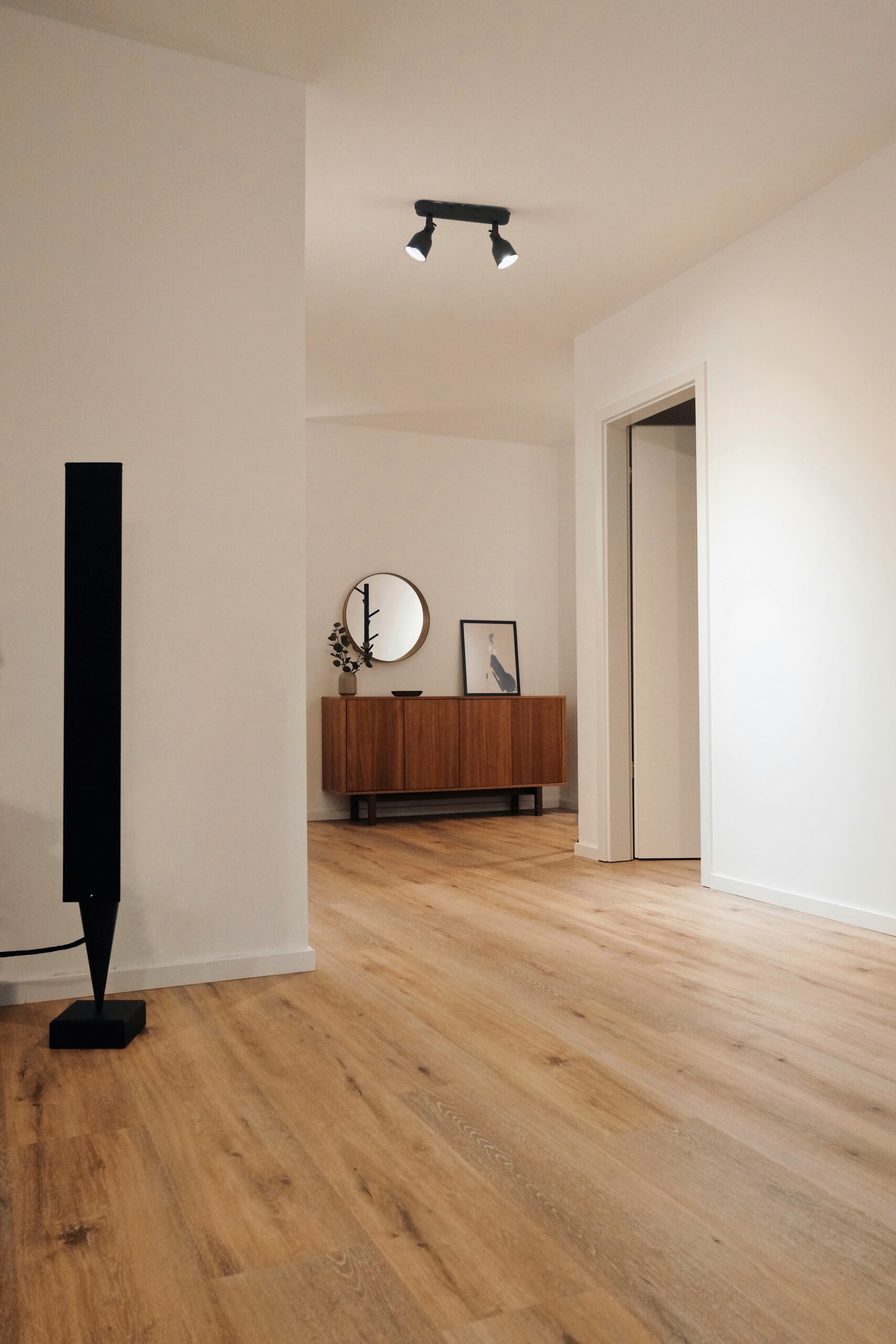
When planning to replace the floors in a house, the question of cost is often a priority for our clients. However, the price of installing a floor can vary considerably depending on the project.
Several factors may come into play, and it is important to understand them thoroughly in order to plan a realistic budget and avoid unpleasant surprises.
The type of flooring chosen
The cost of installation depends greatly on the material you choose. For example:
- Floating floor: conventional installation, generally simpler and faster.
- Hardwood: requires more technical installation and sometimes additional adjustments.
- Ceramic: requires more preparation and drying time.
Each material therefore has its own specific characteristics that directly influence the installer’s working time and, consequently, the cost.
The condition of the subfloor
A damaged, uneven, or squeaky subfloor must be corrected before installation. Preparation may include leveling, repairing, or even replacing entire sections. These steps naturally increase the cost, but they are essential to ensuring the durability of your new floor.
The size and layout of the rooms
The size of the surface to cover has a direct impact on the total cost, but the layout of the rooms matters just as much. A large open space with few angles is simpler (and faster) to install than an area with lots of corners, hallways, or stair steps. The more cuts and adjustments the installation requires, the higher the labor cost will be.
The pattern and laying style
A straight-laid floor does not cost the same as a herringbone or Hungarian point floor. Decorative patterns require more precision and labor time, which affects the final price.
Additional work
Sometimes installing flooring can involve other work: removing and reinstalling baseboards, adjusting doors, redoing trim, or ensuring a smooth transition between two different types of flooring. These details, which are often overlooked, add to the overall cost of the project.
To sum up
The cost of installing flooring depends on several factors: the choice of material, the condition of the subfloor, the layout of your rooms, the installation style, and any additional work that may be required. By discussing these elements with your general contractor, you will get a realistic estimate and avoid unpleasant surprises.
How does Rubix support you?
At Construction Rubix, we know that replacing floors is a significant investment for your home. Our team is committed to supporting you every step of the way.
- A full assessment of your subfloor’s current condition.
- Personalized advice on choosing materials and installation methods based on your budget.
- Transparent planning of costs and work schedule;
- Careful execution by our qualified carpenters or by trusted subcontractors;
- Finishing checks to ensure that every detail is perfect.
Our goal is simple: to provide you with a solid, attractive, and durable floor that fits perfectly into your living space.